About The Book
About the Book
Keep It Professional

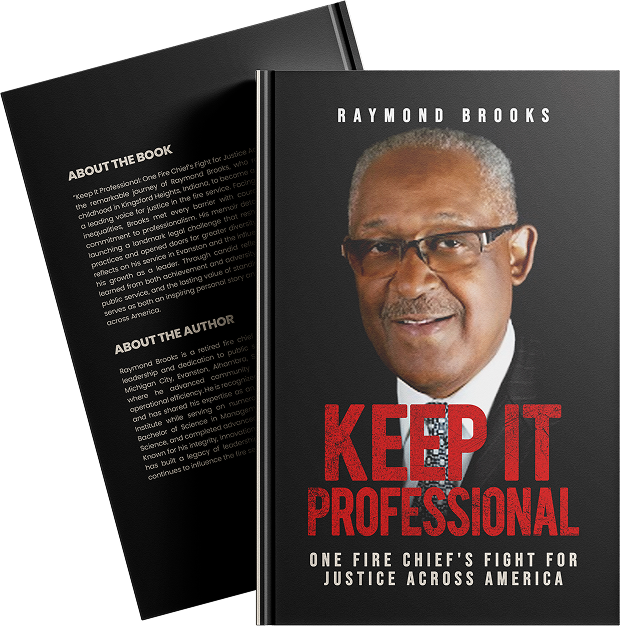
In Keep It Professional, readers walk beside a Black fire chief who spent thirty-five years navigating the sharp edge between duty and discrimination. Starting with a childhood marked by loss, poverty, and a mother’s unshakable standards, Brooks traces how sports, reading, factory work, and union activism prepared him for a profession that rarely welcomed men who looked like him.
The book moves city by city: Michigan City, Evanston, Alhambra, San Jose, Birmingham, and Compton, showing what it means to inherit broken systems and still be responsible for protecting lives. We witness the long fight for a consent decree in Michigan City, the quiet isolation of being “the first” or “the only,” and the daily grind of proving competence in rooms where his presence was questioned before he spoke.
Yet this is also a story of solutions. Brooks details how he introduced accredited training academies, redirected capital budgets, strengthened disaster preparedness, reduced overtime and injuries, and insisted that promotion lists reflect merit rather than politics. Along the way, he mentors younger firefighters, builds alliances inside and outside city hall, and refuses to let anger cheapen his professionalism.
Keep It Professional is both a memoir and a manual, a lived blueprint for anyone who must lead under scrutiny, carry representation on their shoulders, and still deliver calm, competent service when sirens sound and the community calls. It invites chiefs, firefighters, elected officials, students, and citizens to reconsider what public service looks like when justice is embraced as daily work.
Why Read It
Keep It Professional
Keep It Professional is for anyone who has ever felt the weight of being the only one in the room and still showed up to do the job. If you lead a department, manage a crew, sit on a council, or simply care about justice in public safety, this story will unsettle you, challenge you, and ultimately strengthen your resolve.
Through one man’s journey, you see how racism, politics, and tradition can quietly sabotage a mission that is supposed to be about saving lives, and how courage, preparation, and professionalism can push that mission back on track. Brooks offers no slogans, only lived experience: the exhaustion of lonely firsts, the discipline of staying calm under attack, and the satisfaction of watching younger firefighters step through doors that were once bolted shut. You will leave this book with a deeper respect for the fire service and a clearer vision of the kind of leadership your community deserves. It is a mirror for public servants, a warning for gatekeepers, and fuel for reformers.